
How to Improve Nitric Oxide Naturally: The Complete Guide to Circulation and Vascular Health
March 16, 2026
How to Improve Nitric Oxide Naturally: The Complete Guide to Circulation and Vascular Health
How to Improve Nitric Oxide Naturally: The Complete Guide to Circulation and Vascular Health
In recent years, nitric oxide has been a focus in cardiovascular, metabolic, and longevity research.
Nitric oxide (NO) has been identified as a key molecule for some of the most important functions in the human body. Naturally, scientists and health researchers have become interested in the best ways to maximise nitric oxide production and its benefits.
Over the course of this blog we’ll explore why nitric oxide is so important, what happens to nitric oxide levels as we age, how you can naturally maintain nitric oxide levels, and what to watch out for when choosing the best nitric oxide supplements.
Why is nitric oxide important for health?
Nitric oxide is a gaseous compound that’s naturally produced by the human body. It’s known as a ‘signaling molecule’ because it transmits information between cells to regulate vital processes.
NO makes blood vessels relax and widen, a process known as vasodilation. It also prevents blood clots from forming by protecting the platelets in our blood.
The wide-reaching benefits given by the vasodilation process are difficult to overstate:
By widening blood vessels and reducing blockages, NO allows for easier blood flow around the body. This in turn lowers blood pressure (high blood pressure is responsible for up to 10 million deaths annually), and reduces strain on the heart.
Improving blood delivery around the body also has benefits for muscular performance, cognitive function, and even sexual performance!
It’s safe to say, then, that nitric oxide is hugely important for maintaining a healthy lifespan.
So what happens to nitric oxide as we age, and why are researchers so keen to promote NO production via supplements?
Why Nitric Oxide Decline With Age
Like many other vital compounds produced by the body, such as NAD+ and collagen, nitric oxide levels tend to decline with age for a few reasons that compound over time.
The L-arginine pathway - a vicious cycle
Your body produces the majority of its nitric oxide via a process called the L-arginine pathway. This is where an amino acid called L-arginine is used to turn nitric oxide synthase (NOS) into nitric oxide, which can then be used by the body.
However, as we age, our bodies become less efficient both at producing arginine and at actually using it to produce NO. As we get older, things like oxidative stress and inflammation build up, which in turn contribute to increased disease. In many disease states, arginine gets broken down into other compounds, meaning there is less available to use in the pathway.
When arginine is scarce, NOS also depletes, which further exacerbates the deficiency in NO production.
As a result, your body finds itself in a vicious cycle where deficiencies in one part of the cycle cause deficiencies in other parts, leading to a compounding drop in NO production and use.
This drop contributes to many health conditions associated with old age, including heart disease, stroke risk, and hypertension.
Signs Your Nitric Oxide Levels May Be Low
It’s no good waiting until you have a heart attack to find out that your NO levels are depleted.
Common signs that your nitric oxide levels are running low include:
High blood pressure - a lack of NO means your blood vessels are less relaxed and more constricted, this means your blood pressure increases as more force is needed to pump it round the body. While high blood pressure is notoriously symptomless in itself, many healthcare professionals offer free blood pressure tests.
Fatigue and a drop in physical performance - constricted vessels will also mean that less oxygenated blood flows to your muscles during exercise, leading to fatigue and a decrease in performance. If you’re feeling weaker or more tired than usual, NO deficiency could be the reason.
Brain fog and memory loss - an NO deficiency also means that less blood is flowing to your brain, causing cognitive issues.
Age - simply put, unless you’re very lucky or are already intervening, your NO levels will be depleting as you age. By age 40-50, NO production is 50% less than it was in young adulthood. By 65, your NO levels have dropped by 85%.
How to Improve Nitric Oxide Naturally
The best ways to naturally stimulate nitric oxide production are diet and exercise.
Eating foods rich in nitrates such as beetroot and leafy greens help stimulate nitric oxide production without involving the depleted L-arginine pathway.
Exercise can also stimulate nitric oxide production, and keep your levels higher over time.
Beyond this, living a generally healthy life, including getting high quality sleep, avoiding alcohol and smoking, and maintaining a healthy diet, will also help. While these steps may not increase NO levels directly, they will help reduce the cellular decay that makes your body gradually worse at producing it.
Nitric Oxide Supplements: What to Look For
Even if you take all those steps to increase your natural production of nitric oxide, you may still find that your levels of nitric oxide are deficient as you age.
This is because the pathways that your body normally uses to produce nitric oxide have become less efficient. So even if you provide the body with the fuel for natural production of nitric oxide (for example via eating nitrate-rich foods), it is still less effective at using this fuel.
As such, you might look to one of the many ‘nitric oxide boosters’ on the market. Unfortunately, not all nitric oxide boosting supplements are equal.
Here’s what to look out for when choosing a nitric oxide supplement.
Triggering the right pathway
Most NO boosters on the market contain arginine as their active ingredient. This is ineffective for a couple of reasons.
Firstly, as previously mentioned, the L-arginine-NO pathway decays as we age. Feeding your body more arginine won’t solve the problem, because your body’s ability to convert arginine into NO has declined. That’s why your NO levels dropped in the first place!
Secondly, most arginine you put in your body won’t make it to your blood. Instead, the body converts excess arginine into something called arginase, which actually reduces NO production.
So, steer clear of supplements that claim to boost nitric oxide with arginine!
Instead, look for supplements that trigger pathways that remain intact with age, such as the nitrate-nitrite-nitric oxide pathway.
Nitralis® By DoNotAge: Clinically Proven To Increase Nitric Oxide Levels In Humans
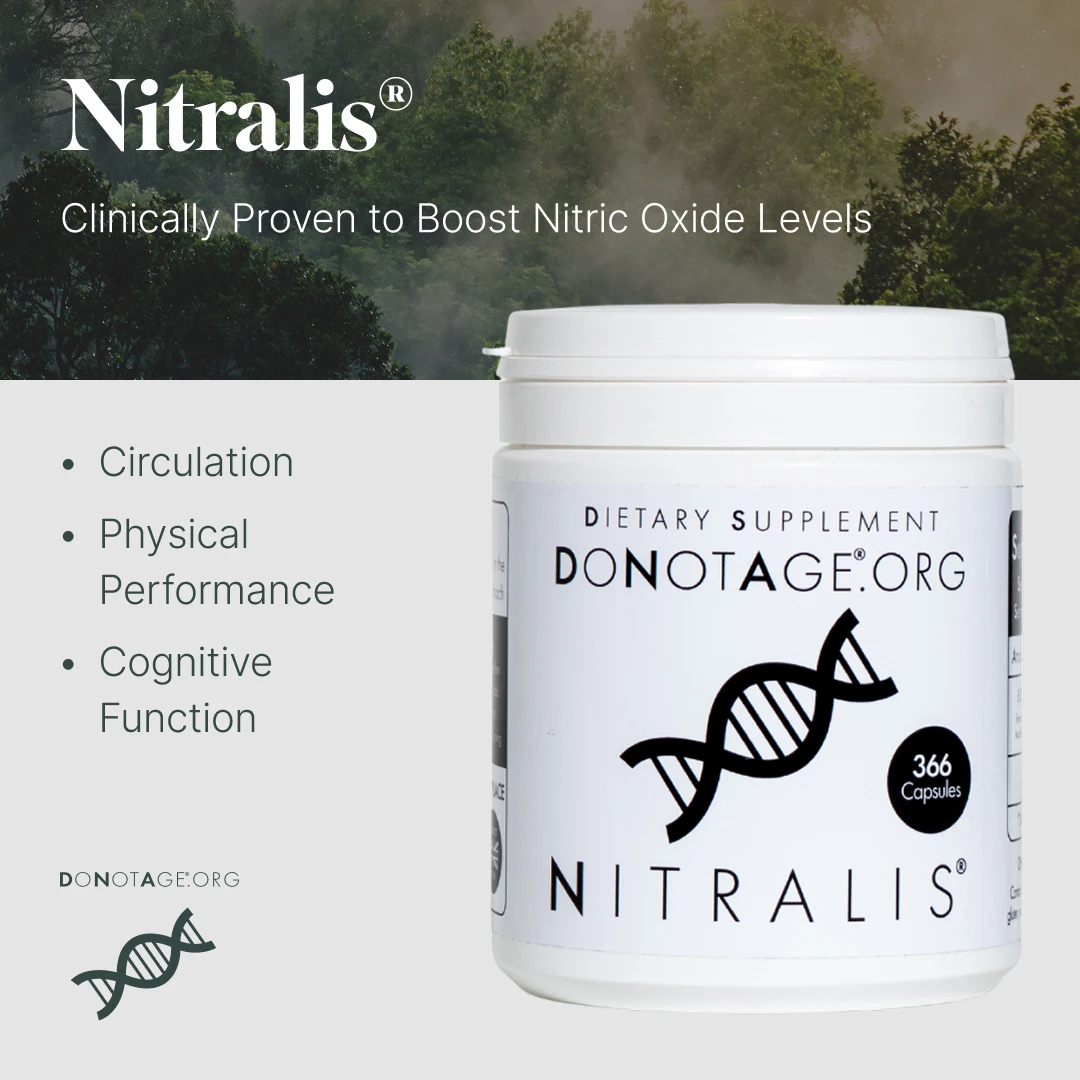
Nitralis® was developed to provide a research-leading, proven solution to the problem of nitric oxide deficiency.
In a double-blind placebo trial, it was shown to raise the NO levels of participants by an average of over 200%.
Nitralis® targets the nitrate-nitrite-NO pathway, which stays efficient with age, meaning it is just as effective in older people.
It contains a combination of ingredients chosen and dosed to provide maximum bioavailability and stability to the nitric oxide it helps create.
For a science-leading solution to low NO levels, choose Nitralis® from DoNotAge.